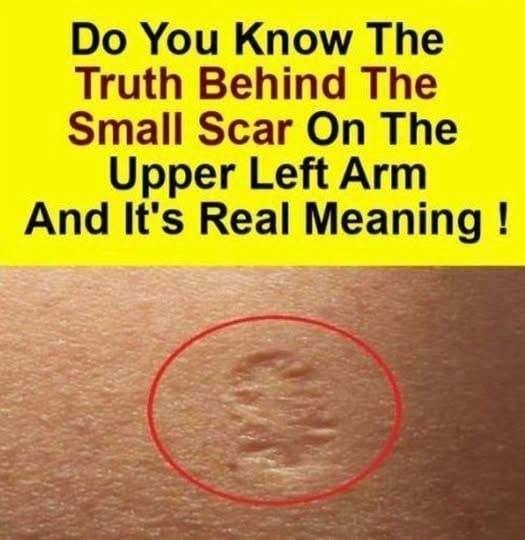
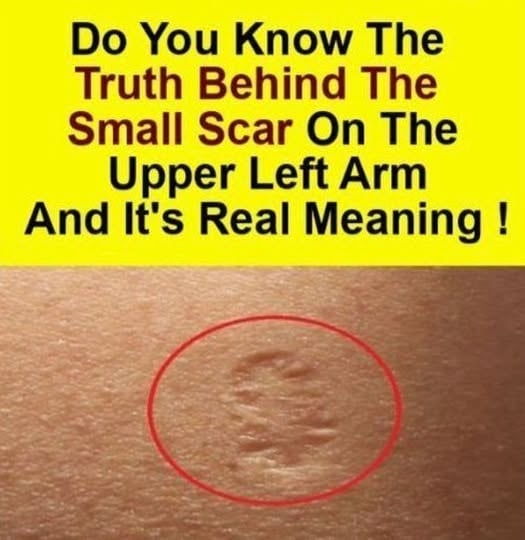
For many Americans, a small, circular scar on the upper arm has long been a quiet curiosity—noticed in childhood, often on parents or grandparents, but rarely explained. For one observer, that mystery began with a simple question: why did their mother carry a perfectly round mark on her skin? The same scar, they later realized, appeared on others of an older generation.
The answer points to one of the most significant public health victories in human history—the fight against Smallpox.
A Disease That Shaped History
Before its eradication, smallpox was among the deadliest diseases known to humankind. Highly contagious and caused by the variola virus, it killed an estimated 30% of those infected. Survivors were often left with deep, permanent scars, and in many cases, blindness.
For centuries, outbreaks swept across continents, reshaping populations and instilling widespread fear. Entire communities were devastated, and the disease showed little mercy.
The Science Behind the Scar
The circular mark that remains on many older adults is not from the disease itself, but from the vaccine designed to stop it.
Using a specialized two-pronged instrument known as a bifurcated needle, healthcare workers introduced a live but weakened virus called vaccinia into the skin. Unlike modern injections, the process involved multiple small punctures.
The body’s immune response produced a localized infection—a blister that eventually scabbed over and healed. In most cases, it left behind the distinctive round scar, a visible sign that the body had built protection against smallpox.
A Victory Unlike Any Other
In 1980, after an aggressive global vaccination campaign led by the World Health Organization, smallpox was officially declared eradicated—the first and only human disease to be completely eliminated worldwide.
Routine vaccination in the United States had already ended in 1972, as the threat diminished.
A Mark That Endures
Today, the smallpox scar serves as more than a medical footnote. It is a permanent reminder of a time when a deadly disease was brought under control through coordinated global effort, scientific innovation, and public trust.
For those who carry it, the mark is not just a scar—it is proof of survival, and of one of humanity’s greatest collective achievements.
