At midnight, the hospital called, and Sarah Thorne learned there are sounds a mother never forgets. Not the phone ringing. Not the nurse clearing her throat. The silence before the words.
For eleven years, Sarah had lived as a florist in Connecticut, working behind glass windows filled with lilies, peonies, and eucalyptus stems. Customers knew her as gentle, efficient, and almost impossible to rattle.
Her daughter Maya knew an even softer version. The mother who packed soup in thermoses during finals. The mother who left tiny notes under windshield wipers. The mother who never talked about the decade before flowers.
Maya was twenty years old and away at college, bright in that fierce, generous way that made strangers underestimate her until she opened her mouth. She studied late, called home every Sunday, and still asked Sarah how to keep orchids alive.
Sarah had built their life carefully. The flower shop was small but clean, with a copper bell over the door and a back room that smelled of damp stems and ribbon glue.
People thought she was ordinary because she let them. That had been the point. After Kabul, after the redacted files, after the sealed extraction reports, ordinary had felt like mercy.
Then the hospital called.
The voice on the line said Maya had been brought into the ER unconscious. No purse. No phone. No friend beside her. Just injuries, trauma, and a black SUV caught on a security camera near the ambulance bay.
Sarah drove through empty streets with both hands on the wheel. The night looked too clean for what had happened. Streetlights shone on wet pavement. The heater blew warm air against her face, but her fingers stayed cold.
At 12:31 a.m., she stepped into the ICU and saw her daughter beneath bandages, tubes, and machine light. The room smelled like antiseptic, plastic, and old coffee abandoned somewhere behind the nurses’ station.
The ventilator moved air for Maya with a steady mechanical hiss. Her face was swollen beyond recognition. One eye was darkened. Her lips were cracked. Purple bruises disappeared beneath the hospital gown.
Sarah did not cry then. Crying belonged to rooms where there was nothing left to do. This room still had evidence.
The trauma chart listed blunt-force injuries, fractured ribs, chemical burns, and circular marks along the collarbone. The ER intake form said she had been found at the ambulance bay without identification.
A nurse told Sarah the burns were unusual. She said it gently, as if softness could make the truth less monstrous. Sarah looked once at the marks and knew they had been made deliberately.
By 1:14 a.m., Sarah had already seen the ER security timestamp. By 1:26 a.m., Maya’s bloodwork had been sealed in a medical chain-of-custody bag. By 1:41 a.m., Elias Vance arrived.
He entered without knocking, a man who had spent his life stepping into rooms as if doors were manners meant for poorer people. He wore a charcoal coat and carried a titanium briefcase.
Sarah recognized the name from Maya’s campus stories. The Vance family donated to buildings, galas, scholarships, and political campaigns. Their son moved with a group other students called the Sterling Pack.
Maya had once mentioned them with disgust. Rich boys who laughed too loudly. Boys who filmed everything. Boys who treated consequences like something staff cleaned up after parties.
Sarah remembered telling Maya to stay away from them. Maya had rolled her eyes and said, “Mom, I know what entitled looks like.” That memory returned now with the sharpness of glass.
Elias Vance placed the briefcase on the visitor chair and opened it. Hundred-dollar bills sat inside in clean bricks, too neat to seem real. Money always looked sterile when people used it as disinfectant.
“One million dollars,” he said softly. “This was a tragic accident at the gala. These young men have very bright futures… they just had a bit too much to drink, a misunderstanding that got out of hand.”
He slid an NDA across the foot of Maya’s bed. The paper had an embossed legal seal, a signature line, and language designed to make brutality disappear behind the word settlement.
“Sign this NDA, and the money is yours,” he said.
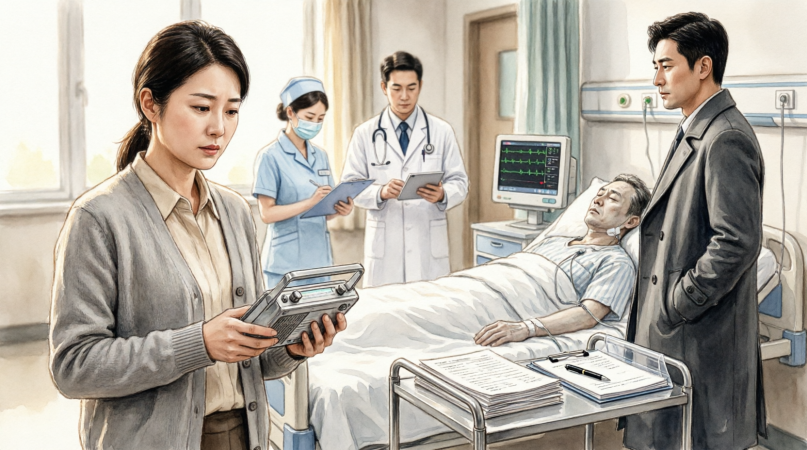
Sarah stood beside Maya, listening to the ventilator. She could hear a nurse pause outside the glass door. A resident stopped in the hallway with a tablet pressed against his chest.
Vance did not look at Maya. That was the detail Sarah would remember most clearly later. Not the money. Not the briefcase. The way he avoided looking at the injured girl whose silence he was trying to purchase.
“Take the money,” he said. “Pay off your little flower shop, and go back to your flowers. Don’t ruin your life trying to fight people who literally own the courts in this state.”
There are men who threaten with volume, and men who threaten with paperwork. Elias Vance was the second kind. Cleaner. Safer-looking. More dangerous in public.
Sarah looked down at Maya’s hand. Bruised fingers rested against the sheet, still wearing the thin silver ring Sarah had given her after high school graduation.
For a heartbeat, Sarah imagined violence. Fast, efficient, final. She imagined Vance’s head striking the glass cabinet behind him. She imagined the crack and the silence afterward.
But rage is loud only when it is young. The older kind learns to breathe slowly.
She breathed.
Then she picked up the NDA. She did not read it carefully. She had read enough legal camouflage in war zones to know when language was being used as a body bag.
She took Vance’s fountain pen and wrote on the back of the agreement. Not a signature. A sequence.
17-9-41. 6-0. Blackout.
Vance watched, amused at first. “Is that supposed to frighten me?”
“No,” Sarah whispered.
Her voice changed the room. The nurse outside stopped moving. The resident lowered his tablet. Even Vance seemed to register, briefly, that grief had not broken this woman in the direction he expected.
Sarah slid the agreement back. “Get out.”
Vance closed the briefcase. His smile stayed polished, but the first crack had appeared in his confidence. “You’ll come around, Mrs. Thorne. Grief makes people dramatic.”
He left believing time and pressure would do what money had not. Men like him trusted systems because systems had always trusted them back.
Sarah waited until the door clicked shut. Then she reached into the hidden lining of her bag and removed a satellite phone wrapped in a cloth sleeve.
It had not touched her hand in eleven years.
The plastic felt colder than she remembered. She dialed the numbers she had written on the NDA. For three seconds, there was only encrypted static. Then a line opened.
“Authenticate,” said the voice.
Sarah looked at her daughter’s bandaged face, the circular burns, the medical chart, the briefcase-shaped dent still left in the chair cushion.
“This is Raven,” she said. “I need full operational dossiers on the Sterling Pack. I’m going active. Code: Blackout.”
The silence that followed was not confusion. It was recognition.
“Raven status was sealed,” the operator said. “Eleven years inactive.”
“Unseal it.”
Sarah photographed the trauma chart, the NDA, the chain-of-custody label, and the ER security timestamp. Each image uploaded through an encrypted channel marked by a thin red progress line.
The first return file came fast. Sterling Pack. Six families. Four judges. Two police foundations. One donor board at Maya’s college.
This was not a group of drunk heirs making one terrible mistake. It was a protected ecosystem, built from money, silence, and people trained to look away.
Then the first page opened, and Sarah saw a name she had not expected. It was not Elias Vance at the top of the file. It was someone attached to the college disciplinary office.
That name changed the shape of everything.
Sarah did not rush. She never rushed when danger became complicated. She documented every item in the room, copied every file, and requested archived campus reports connected to the same donor families.
By dawn, a pattern emerged. Three sealed complaints. Two transferred students. One missing incident report from a gala the previous spring. Each had been softened with language. Misconduct. Misunderstanding. Excess alcohol.
By sunrise, Sarah had a forensic map of protection. It showed who paid, who signed, who buried, and who called parents before calling police.
Maya woke briefly that afternoon. Her eyes opened only a fraction, cloudy with medication and pain. Sarah leaned close, careful not to touch anything that hurt.
“Mom?” Maya breathed.
“I’m here.”
Maya’s lips trembled. “They laughed.”
The words were small, barely more than air, but Sarah felt them land with more force than any threat Vance had made.
“Who?” Sarah asked.
Maya’s fingers twitched against the sheet. “Sterling,” she whispered. “All of them.”
That was enough.
Sarah did not ask Maya to relive it. Not then. She called the nurse, asked for pain management, and kissed the only unbruised place on Maya’s forehead.
Then she left the ICU and went to work.
The flower shop stayed closed for eight days. A handwritten sign in the window said family emergency. Behind it, the back room became an operations table.
Invoices were moved. Ribbons were boxed. Buckets of lilies sat untouched while Sarah spread dossiers across the stainless prep counter where she usually trimmed stems.
She identified drivers, shell donations, private security contracts, and tuition-board relationships. She matched campus gala photos with hospital timestamps and messages recovered through channels she had promised herself never to use again.
Elias Vance called twice. The first call was polished. The second was irritated. The third came through his attorney and used words like defamation, harassment, and unlawful interference.
Sarah saved all three recordings.
On the ninth day, the first warrant landed. Not because the courts suddenly became pure, but because Sarah had not taken her evidence to the courts Vance believed he owned.
She sent it higher. Wider. To agencies whose names did not appear on his donor lists……………………………
The black SUV was seized. The covered plates were removed. Fibers from the back seat matched Maya’s dress from the gala. Burn patterns matched a heated signet ring belonging to one of the heirs.
When the Sterling Pack realized their parents could not make every camera disappear, they turned on one another with the speed of boys who had mistaken loyalty for shared arrogance.
One gave up the group chat. One admitted the ambulance bay drop-off. One claimed Elias Vance had told them to “let the adults handle the cleanup.”
Vance denied everything until the wire transfer ledger surfaced. One million dollars had been withdrawn from a family-controlled account two hours before he entered Maya’s ICU room.
The NDA carried his fingerprints, Sarah’s number sequence, and a trace of Maya’s blood from the foot of the hospital bed where he had placed it.
At the hearing, Vance looked smaller than he had in the ICU. Men like him often do when fluorescent lights replace private rooms and every word is recorded.
Sarah sat behind the prosecutor with Maya’s hand in hers. Maya wore a pale blue scarf over healing scars and kept her eyes forward.
The judge read the charges without flourish. Assault. Evidence tampering. Witness intimidation. Conspiracy. Obstruction.
When Elias Vance finally looked back, Sarah did not smile. She had never done any of this for satisfaction. Satisfaction was too small for what had been done to her child.
She had done it because an entire system had taught Maya that pain could be negotiated over her unconscious body.
And Sarah wanted that lesson burned out at the root.
Months later, Maya returned to the flower shop before she returned to campus. She sat in the back room while Sarah trimmed white roses and eucalyptus, both of them pretending the silence was ordinary.
Then Maya picked up a ribbon and tied it badly around a vase.
Sarah laughed before she could stop herself. Maya laughed too, and the sound broke something open in the room that had been locked since midnight.
Healing did not arrive like victory. It arrived in uneven breaths, in court dates survived, in nights without nightmares, in Maya learning that her body was not evidence forever.
The world had seen Sarah Thorne as a struggling single mother with a little flower shop. Elias Vance had seen the same thing and believed it made her purchasable.
He forgot to check her background.
Before she was a florist, Sarah had been Raven. But by the end, the classified file was not what saved Maya. It was a mother who knew that softness was useful, quiet was not helpless, and love could be surgical when it had to be.
Here is Part 1 continuing your story from the uploaded text.
The Name Maya Whispered
For eight days, my flower shop stayed closed.
The lilies browned in their buckets.
The roses opened too wide and dropped petals over the stainless prep table.
The bell above the door stayed silent.
Outside, customers pressed concerned notes through the mail slot.
Inside, Sarah Thorne no longer arranged flowers.
Inside, Raven built a war map.
Every wall in the back room carried evidence now.
Campus gala photos.
ER timestamps.
Donor lists.
Private security contracts.
Court filings.
Police foundation receipts.
Old disciplinary reports rewritten with clean words over dirty violence.
Misunderstanding.
Misconduct.
Overconsumption.
Private resolution.
The world had always loved polite language for ugly things.
I stood beneath the humming fluorescent light with gloves on, studying the faces of the boys who had touched my daughter.
Preston Vance.
Miles Ashcroft.
Theo Bellamy.
Nolan Greer.
Julian Cross.
Each one smiling in tuxedos beneath chandeliers.
Each one standing beside fathers who donated wings to hospitals, mothers who chaired charity boards, judges who attended Christmas dinners, and deans who knew exactly which complaints to misplace.
The Sterling Pack.
That was what students called them.
Not because they were brilliant.
Because they moved together like a protected breed.
Expensive watches.
Private cars.
Threats disguised as jokes.
Cruelty disguised as confidence.
Maya had once described them as “boys who think consequences are poor people’s weather.”
I almost smiled when I remembered that.
My daughter always did have a gift for language.
Then I looked at the trauma photos again.
The smile died.
At 3:16 a.m. on the ninth day, the satellite phone vibrated.
One message.
New file recovered.
Source: campus disciplinary archive.
Status: deleted but recoverable.
I opened it.
The file contained a complaint from seventeen months earlier.
A sophomore named Lila Moreno had accused the Sterling Pack of trapping her in a locked study room after a donor reception.
The complaint had been marked “unsubstantiated” within forty-eight hours.
Lila transferred before finals.
Her scholarship vanished.
Her father’s landscaping company lost three contracts connected to Vance developments two weeks later.
I printed the file and added it to the wall.
Then another recovered complaint came through.
Then another.
By sunrise, I had eleven girls.
Eleven names.
Eleven stories buried in paperwork.
And suddenly Maya was no longer an exception.
She was the first one they failed to erase because they had chosen the wrong mother.
At the hospital that morning, Maya was awake.
Not fully.
Not comfortably.
But awake.
Her left eye had opened enough for her to see me sit down beside her bed.
Her voice came out broken.
“Mom.”
“I’m here.”
She tried to move her hand.
I held it carefully.
Her fingers were swollen.
Bruised.
Still warm.
That warmth kept me human.
Barely.
“I don’t remember everything,” she whispered.
“You don’t have to.”
She swallowed with difficulty.
“I remember laughing.”
My chest tightened.
“Them laughing?”
She nodded weakly.
Then tears slipped sideways into her hairline.
“They said nobody would believe me.”
I felt the old coldness return.
The surgical kind.
The kind that used to settle into my body before doors were breached and lights went out.
“They were wrong.”
Maya turned her face slightly toward me.
Her expression trembled with pain and medication and fear.
“Mom… there was a girl.”
I leaned closer.
“What girl?”
“She helped me.”
Every nerve in my body sharpened.
“At the gala?”
Maya closed her eyes, struggling through fractured memory.
“She worked there.
Catering maybe.
Black apron.
Red hair.”
I pulled my notebook from my bag.
“What did she do?”
“She tried to stop them.”
Maya breathed unevenly.
“One of them pushed her.
She fell.
Then I remember her saying my name.”
My pen froze.
“She knew your name?”
Maya nodded faintly.
“She said, ‘Maya, stay awake.’”
The room seemed to narrow.
A catering girl knew my daughter’s name.
A witness.
Maybe the only witness they had not yet buried under money.
“What else?”
Maya’s eyelids fluttered.
“She put something in my hand.”
I looked down at Maya’s bandaged fingers.
There had been nothing in the intake list except jewelry and torn fabric.
“What did she put?”
Maya whispered:
“A key.”
My pulse slowed.
“What kind of key?”
“I don’t know.”
Her breath hitched.
“They took it.”
“Who?”
Maya opened her good eye.
And then she whispered the name that changed the entire investigation.
“Dean Halpern.”
For one second, I did not move.
Dean Halpern.
The name at the top of the file.
The man attached to the college disciplinary office.
The man whose signature appeared on seven dismissed complaints.
The man whose wife sat on the Vance Foundation scholarship board.
I kissed Maya’s knuckles gently.
“Rest.”
Her hand tightened weakly around mine.
“Mom?”
“Yes.”
“You look different.”
I smiled softly.
“Good.”
She studied my face as if seeing someone familiar through smoke.
“Are you scared?”
I told her the truth.
“Yes.”
Because courage is not the absence of fear.
It is deciding fear does not get command.
Maya closed her eye again.
“Don’t let them win.”
I leaned close to her ear.
“They already lost.”
By noon, I found the red-haired catering girl.
Her name was Nora Pike.
Nineteen.
Community college student.
Part-time event server.
Older brother in the Marines.
Mother deceased.
Father disabled.
No political connections.
No money.
No protection.
Exactly the kind of girl people like Elias Vance expected the world to forget.
She had vanished the night after Maya was dumped at the ER.
Not reported missing.
Not officially.
Just absent from work.
Phone off.
Apartment empty.
Landlord claiming she “left suddenly.”
I pulled her employee file through a back channel and found the emergency contact.
A grandmother named June Pike living forty miles north in a trailer park near the state line.
By 3:00 p.m., I was driving there in a borrowed gray sedan with false plates.
Old instincts returned too easily.
That frightened me less than it should have.
The trailer park sat behind a closed gas station, half buried beneath wet pine needles and January mud.
June Pike’s trailer had a plastic owl on the railing and one porch light flickering like it was losing an argument with the dark.
I knocked twice.
No answer.
Then I heard the safety chain shift.
An old woman’s voice said:
“If you’re from the college, I already told you she ain’t here.”
“My name is Sarah Thorne.”
Silence.
Then the door opened two inches.
June Pike had white hair cut short, sharp eyes, and a shotgun angled low behind the door.
Good.
Fear had not made her helpless.
It had made her ready.
“I’m Maya’s mother,” I said.
Her expression changed instantly.
Not surprise.
Recognition.
Pain.
She opened the door wider.
“Nora said you might come.”
Inside smelled like cigarette smoke, canned soup, and lavender cleaner.
A space heater rattled near the couch.
The curtains were pinned shut.
June locked three bolts after I entered.
“She alive?” June asked.
“Maya?”
She nodded.
“Yes.”
June closed her eyes briefly.
“Thank God.”
“Where is Nora?”
The old woman looked toward the hallway.
“She’s sleeping.”
Relief came sharp enough to make my knees almost weaken.
Almost.
June pointed toward the tiny kitchen table.
“She hasn’t slept more than an hour at a time since that night.”
I sat.
Not because I wanted to.
Because if Nora was inside this trailer, I needed to become Sarah for a few minutes before Raven frightened her back into silence.
June made coffee with shaking hands.
“They came here first,” she said.
“Who?”
“Men in suits.
One local cop with them.
Said Nora stole from the event venue.
Said if she came home, I should call them.”
My jaw tightened.
“What did Nora steal?”
June gave me a look.
“The truth, I expect.”
A door creaked down the hallway.
Nora appeared barefoot, wrapped in an oversized sweatshirt.
Her red hair was pulled back badly.
One cheek was bruised yellow.
She froze when she saw me.
I stood slowly.
“You helped my daughter.”
Nora’s face crumpled before she could stop it.
“I tried.”
Two words.
That was all.
Then she broke.
Not loudly.
Not dramatically.
She folded into herself against the hallway wall, crying with both hands over her mouth like she had learned sound could be punished.
I crossed the room slowly and stopped several feet away.
No sudden movement.
No touching without permission.
Combat taught me many things.
Motherhood taught me the rest.
“You got her to the ambulance bay?”
Nora nodded.
“Not alone.”
“Who helped?”
Her breathing hitched.
“A driver.
He works valet.
His name is Samir.”
“Where is he?”
“I don’t know.”
Her eyes filled with fresh terror.
“They took him.”
June cursed softly from the kitchen.
Nora wiped her face with her sleeve.
“I heard them talking.
They said Maya was going to be made an example because she had been asking about Lila.”
Lila Moreno.
The first recovered complaint.
My daughter had been investigating them.
Of course she had.
Brilliant enough to terrify professors.
Gentle enough to apologize to flowers.
And stubborn enough to follow buried screams into rooms full of wolves.
“What key did you give Maya?” I asked.
Nora stared at me.
“She remembered?”
“Yes.”
Nora swallowed hard.
“It was from the west archive room under the alumni hall.”
My pulse slowed again.
“The disciplinary archive?”
She nodded.
“Dean Halpern keeps physical backups there.
Not official.
Private.”
“How do you know?”
Nora looked down.
“Because Lila was my roommate before she transferred.”
The room went silent.
There it was.
The invisible thread.
Lila.
Nora.
Maya.
The girls had been passing warnings through whispered networks because the adults were busy protecting donors.
Nora continued:
“Lila sent me a letter before she left.
She said if anything happened again, get proof from the archive room.
She said Halpern kept copies because copies are leverage.”
Copies are leverage.
Smart girl.
Destroyed girl.
Still fighting.
“What happened at the gala?” I asked.
Nora sat slowly.
June stood behind her like a guard dog in slippers.
Nora’s voice shook but held.
“Maya confronted Preston Vance near the service hallway.
She told him she had names.
She said she knew about Lila and the others.
He laughed at her.
Then Miles took her phone.
Theo said girls like her always think truth matters until money shows up.”
My hands remained still on the table.
Stillness was discipline.
Stillness was mercy.
Nora pressed on.
“They dragged her into the lower lounge.
I followed because I saw her fighting.
I tried to call security, but the guard outside just looked away.”
“Name?”
“Briggs.”
I wrote it down.
“I got inside through the catering door.
Maya was still conscious then.
She was bleeding.
I screamed.
One of them shoved me into the wall.”
She touched her bruised cheek.
“Samir came in because he heard me.
That’s when they panicked.”
“Who called Dean Halpern?”
Nora looked up.
“The judge’s son.”
“Nolan Greer?”
She nodded.
“He said, ‘Call Halpern before Dad hears.’”
I wrote that down too.
The room felt smaller with every truth.
“Halpern came himself?”
“Yes.”
Her voice dropped.
“He took Maya’s phone.
He took the key from her hand.
Then he told Preston’s father they needed cleanup before police language entered the building.”
Police language.
Not police.
Not justice.
Language.
These people feared words more than wounds.
Because wounds could be negotiated.
Words became records.
“What happened to Samir?”
Nora shook harder now.
“He drove Maya.
I held pressure on her ribs in the back seat.
We left her at the ambulance bay because Samir said if we walked in, they’d arrest us before treating her.”
“Then?”
“He dropped me near campus and told me to disappear.”
Her voice cracked.
“He said he’d get the key back.”
I leaned forward slightly.
“How?”
Nora reached beneath her sweatshirt collar and pulled out a thin chain.
On it hung a tiny black drive.
Not a key.
A drive.
“They didn’t get the real one.”
My breath stopped.
Nora held it out with trembling fingers………………………….
“Maya told me if anything happened, give this to someone who still knew how to be dangerous.”
I stared at the drive.
My daughter.
My brave, reckless, brilliant daughter.
She had known more than she told me.
She had walked into that gala carrying bait.
And somehow she trusted that if she survived long enough, I would understand the rest.
I took the drive carefully.
“What’s on it?”
Nora whispered:
“The list.”
June crossed herself.
“What list?”
Nora’s voice became almost inaudible.
“The girls they paid off.
The judges they used.
The police they called.
And the room numbers.”
Room numbers.
My fingers closed around the drive.
Outside, a car rolled slowly past the trailer.
All three of us went silent.
The headlights swept across the pinned curtains.
Then stopped.
Nora turned white.
June reached for the shotgun.
I stood calmly and moved to the window.
A black SUV idled outside.
Covered plates.
Same model.
Same confidence.
Men like Elias Vance always believed fear arrived before them.
They never understood what waited when fear finally ran out.
I turned to June.
“Take Nora to the back room.”
June nodded once.
No questions.
Good woman.
Nora grabbed my sleeve.
“There are three of them.”
I looked at her.
“No.”
A knock came at the trailer door.
Heavy.
Official.
“Mrs. Pike,” a man called.
“We need to speak with your granddaughter.”
I pulled on my gloves slowly.
Then smiled for the first time in days.
“There are only three outside.
The Men Outside June Pike’s Trailer
The knock came again.
Harder this time.
Not the knock of someone requesting entry.
The knock of men already convinced the room belonged to them.
“Mrs. Pike,” the voice called again.
“This is private investigative retrieval on behalf of the Vance family.”
Private investigative retrieval.
That was a cleaner phrase than intimidation squad.
Cleaner than witness suppression.
Cleaner than we came to erase the girl before she talks.
I stood beside the trailer window watching the black SUV idle beneath the weak porch light.
Three men.
Driver stayed behind the wheel.
Two outside.
One broad-shouldered in a dark wool coat.
The other thinner, restless, scanning windows instead of doors.
Not professionals.
Corporate muscle.
Expensive enough to scare civilians.
Cheap enough to be expendable.
Behind me, June Pike moved Nora down the narrow hallway toward the back bedroom.
I heard the shotgun click softly.
Good.
June understood the shape of danger.
Nora stopped once and looked back at me.
Fear sat all over her face, but beneath it lived something else now.
Hope.
That frightened me more than the men outside.
Because hope creates responsibility.
I waited until the bedroom door shut.
Then I pulled the satellite phone from my coat pocket and tapped twice against the side.
Encrypted camera sync activated instantly.
Live upload.
No interruptions.
No deletions.
No convenient technical failures later.
The pounding on the trailer door grew sharper.
“Open the door now.”
I crossed the room slowly.
Calmly.
The old floor creaked beneath my boots.
On the kitchen counter sat June’s chipped ceramic sugar bowl beside unpaid bills and a half-finished crossword puzzle.
Ordinary life.
That was always the saddest part.
Violence never arrives in prepared places.
It invades kitchens.
Living rooms.
Hospital beds.
Flower shops.
I unlocked the trailer door and opened it halfway.
Cold January air rushed inside carrying pine smell, wet asphalt, and male arrogance.
The broad one spoke first.
“Evening.”
“No,” I said quietly.
“It isn’t.”
His eyes narrowed slightly.
Not because of the words.
Because of the tone.
Men who spend their lives threatening civilians recognize very quickly when someone does not react like prey.
“We’re looking for Nora Pike.”
“Then you should’ve called.”
The thinner man stepped forward.
“This situation concerns wealthy and politically connected families.
You don’t want involvement.”
I almost laughed.
They still thought this was about status.
Cute.
The broad one softened his expression into practiced professionalism.
“Nora witnessed a traumatic misunderstanding.
Our clients simply want to help her clarify events before media narratives spiral.”
Media narratives.
Another clean phrase.
The world powerful men build is mostly vocabulary.
I leaned lightly against the trailer doorway.
“And if she refuses?”
The thinner one answered this time.
“She won’t.”
There it was.
The truth always surfaces fastest through impatient men.
I studied them quietly.
Former military posture on the broad one.
Private contractor maybe.
The thin one carried nervous energy.
Hands too active.
Eyes too fast.
Neither expected resistance from a florist standing in a trailer doorway.
That was useful.
Behind them, the SUV engine continued idling softly.
Driver still inside.
Watching.
Waiting.
I looked directly at the broad one.
“What are your names?”
Neither answered immediately.
Also useful.
Finally:
“Mr. Dane.”
Fake.
“Mr. Cole.”
Also fake.
I nodded slowly.
“Okay.
Then here’s mine.”
The porch light buzzed overhead.
Snowmelt dripped from the trailer roof.
Somewhere far off, a dog barked once.
Then I said:
“Raven.”
The reaction was immediate.
Not recognition exactly.
Instinct.
Certain words carry weight even when people don’t fully understand why.
The broad one straightened subtly.
Military after all.
Interesting.
The thinner one frowned.
“What?”
I smiled faintly.
“You should ask someone older.”
Then I slammed the trailer door directly into his face.
Bone cracked.
Not badly.
Enough.
He staggered backward swearing violently.
Before the broad one reacted, I opened the door again and drove my elbow into his throat hard enough to crush sound.
He folded instantly.
I stepped outside barefoot-quiet despite the frozen ground and caught the thinner man by the coat collar before he regained balance.
He reached for his waistband.
Too slow.
I twisted his wrist backward until tendons screamed and the gun dropped into slush.
Then I shoved him face-first into the SUV hood.
Metal dented beneath the impact.
Inside the vehicle, the driver exploded out his door reaching for something under his jacket.
Professional mistake.
Hands should already be visible before exiting confined space.
I crossed the distance before he fully cleared the seat.
One strike beneath the jaw.
Second into the sternum.
Third against the knee sideways.
He collapsed into the gravel choking.
The broad one recovered enough to swing at me from behind.
Heavy punch.
Predictable arc.
I slipped sideways and caught his wrist.
Former military confirmed immediately.
Bad shoulder.
Old injury.
I tore the arm backward until he hit the SUV screaming.
Then I pinned him there.
My voice stayed calm.
Almost gentle.
“Who sent you?”
He spat blood near my boots.
“Go to hell.”
Reasonable answer.
Wrong night.
I bent his injured shoulder slightly farther.
The sound he made turned sharp instantly.
“Who sent you?”
“Vance.”
“Which one?”
“Elias.”
The thin one tried reaching for the dropped handgun again.
Without looking away from the broad one, I kicked the weapon beneath the SUV.
“You don’t get a second warning.”
He froze.
Smart enough after all.
Inside the trailer, I heard June moving carefully near the hallway.
Not panicking.
Listening.
Good woman.
The driver on the ground coughed hard enough to vomit into the gravel.
I crouched beside him.
“Did Elias tell you who I was?”
“No.”
“Did Dean Halpern?”
His face changed.
Tiny movement.
Enough.
So Halpern knew something.
Interesting.
I pulled the satellite phone from my pocket and photographed all three faces.
Then their weapons.
Then the SUV plates.
The broad one realized what that meant instantly.
“You can’t use those.”
“I already am.”
Live upload complete.
Three copies sent before he finished speaking.
The thin one looked genuinely frightened now.
Good.
Fear creates honesty faster than pain most of the time.
I stood slowly.
“You threatened a witness connected to a federal investigation.”
Blank stares.
They didn’t know.
Of course they didn’t.
Foot soldiers rarely understand the size of the war they’re sent into.
The broad one swallowed hard.
“What investigation?”
I tilted my head slightly.
“That’s the problem with rich families.
Nobody tells the help when the ceiling starts collapsing.”
Headlights appeared at the far end of the trailer road suddenly.
Another vehicle approaching.
Fast.
All three men stiffened.
Not backup.
They would’ve relaxed if expected.
I listened carefully.
Engine heavier.
Government issue maybe.
Then blue lights exploded silently across the trees.
Unmarked federal SUV.
Two of them.
The broad man whispered:
“Oh God.”
Agents exited before the vehicles fully stopped.
Dark jackets.
Body armor.
Disciplined movement.
Not local police.
Good.
One agent leveled his weapon immediately.
“Hands where I can see them.”
The thin one tried speaking first.
“We’re licensed contractors—”
“On the ground.”
The authority in the agent’s voice flattened him instantly.
Within seconds all three men lay cuffed in freezing mud while agents photographed weapons and searched the SUV.
The lead agent approached me carefully.
Mid-forties.
Silver at the temples.
Scar beneath left eye.
Professional.
Tired.
He looked at the satellite phone in my hand.
Then at me.
Recognition arrived slowly.
Not from memory.
From files.
“Raven.”
I nodded once.
He exhaled heavily through his nose.
“They told me you were dead.”
“People say that a lot.”
A corner of his mouth almost moved.
Almost.
Then his expression hardened again.
“We intercepted your activation packet six hours ago.”
“Good.”
“You started a wildfire.”
“No,” I said quietly.
“They did.”
Behind us, another agent opened the black SUV trunk.
Then paused.
“Sir.”
The lead agent turned.
Inside the trunk sat zip ties.
Bleach.
A shovel.
And a plastic gas can.
Nobody spoke for a second.
The broad contractor closed his eyes slowly.
He knew the game changed now.
This was no longer intimidation.
This became conspiracy with preparation.
Attempted disappearance.
Witness extraction.
Maybe murder.
The lead agent looked back at me.
“Where’s Nora Pike?”
“Safe.”
“For now.”
I studied him carefully.
“You trust your people?”
“Yes.”
“You sure?”
That landed.
Because infiltration was exactly how networks like Sterling survived.
Judges.
Police.
Administrators.
Private security.
Money spreads infection through systems slowly.
The agent nodded once after a long silence.
“Fair question.”
Then he lowered his voice.
“We have another problem.”…………………………………..
“Which is?”
He looked toward the trailer.
Then back at me.
“The disciplinary archive under alumni hall burned thirty minutes ago.”
Cold spread through me instantly.
Not panic.
Calculation.
Too fast.
Halpern moved too fast.
The agent continued:
“Campus security called it an electrical fire.”
“Of course they did.”
“But here’s the strange part.”
He handed me a printed photograph from inside his coat.
Smoke poured from a basement stairwell beneath alumni hall.
Students gathered outside.
Fire crews arriving.
And standing near the edge of the crowd—
Maya.
My blood stopped.
“No.”
The timestamp read nineteen minutes earlier.
Impossible.
Maya was supposed to be in ICU.
Sedated.
Barely conscious.
Yet there she stood in hospital sweats beside the burning building.
And next to her—
a tall man in a dark coat holding her upright.
The valet.
Samir.
Alive.
The agent looked directly at me.
“Your daughter left the hospital two hours ago.”
The Fire Beneath Alumni Hall
For one full second, I forgot how to breathe.
The photograph trembled slightly in my hand beneath the flickering porch light outside June Pike’s trailer.
Maya.
Standing beside a burning building she was never supposed to reach alive.
Hospital bracelet still on her wrist.
Bruises visible even in grainy print.
And Samir—
alive.
Not disappeared.
Not buried.
Alive and holding my daughter upright while smoke climbed into the winter sky behind them.
The federal agent watched my face carefully.
“You didn’t know.”
Not a question.
“No.”
My voice came out colder than the January air.
“She was under observation.”
“She checked herself out against medical advice.”
Of course she did.
My daughter inherited every reckless survival instinct I spent years trying to bury.
Behind us, agents shoved the contractors into separate SUVs while June Pike finally opened the trailer door holding the shotgun against one hip.
Nora stood behind her pale as paper.
The lead agent noticed immediately.
“That’s Nora?”
“Yes.”
He studied her for a moment.
Then motioned another female agent forward.
“You’ll come with us tonight.”
Nora stiffened.
“No.”
The agent softened his tone slightly.
“Miss Pike, those men came prepared for extraction.”
Nora’s eyes flicked toward the open SUV trunk.
Zip ties.
Bleach.
Gas can.
Her face went gray.
I stepped closer before panic swallowed her entirely.
“You trust me?”
Nora nodded instantly.
“Then listen carefully.
Go with them.
Do not use your phone.
Do not call anyone except June.
And if anyone asks about the drive—”
Her hand moved instinctively toward the chain beneath her sweatshirt.
“I never had it.”
“Good.”
The lead agent glanced between us.
“What drive?”
I looked directly at him.
“The kind people burn buildings over.”
That answer was enough for now.
He didn’t press.
Also good.
Professional men know when information arrives in layers.
I handed the photograph back carefully.
“I need transport.”
The agent stared at me.
“To the fire?”
“To my daughter.”
“You’re not operational federal personnel anymore.”
I almost smiled.
“Neither is a wolf after retirement.
Still dangerous.”
That earned the faintest reaction from him.
Tiny.
Respect maybe.
Or concern.
He finally nodded toward the second SUV.
“Five minutes.
Then we move.”
Inside the vehicle smelled like cold leather, coffee, and weapons oil.
Familiar enough to stir old reflexes before I forced them down again.
Sarah.
Remember Sarah.
Not Raven.
Not tonight.
I sat in the back seat studying every inch of the alumni hall fire photo while the agent drove hard through snow-dark roads toward campus.
“Maya planned this,” I said finally.
The agent glanced at me through the mirror.
“Why?”
“Because she left the hospital for the archive.”
“She could barely stand.”
“She still went.”
I stared at the image again.
My daughter looked terrified.
Exhausted.
But determined.
Exactly like me at twenty-two.
That realization chilled me deeper than the winter roads.
“Your daughter’s file was flagged two years ago,” the agent said quietly.
I looked up sharply.
“What?”
“She started requesting restricted campus incident reports connected to donor families.”
Pride and fear collided violently inside my chest.
“She was investigating them.”
“Yes.”
The agent gripped the wheel tighter.
“Which means someone noticed her long before the gala.”
Jesus Christ.
Maya didn’t stumble into danger.
She walked toward it knowingly.
The campus skyline appeared through falling snow twenty minutes later.
Emergency lights painted the night red and blue.
Smoke still poured from beneath alumni hall while students gathered behind barricades filming everything with phones.
Modern civilization.
Nothing burns privately anymore.
The SUV rolled past campus security after the lead agent flashed credentials through the window.
I stepped out before the vehicle fully stopped.
Cold air hit hard.
The fire smelled wrong.
Not accidental electrical smoke.
Accelerant.
Fast burn.
Intentional.
Firefighters moved around the lower stairwell entrance while reporters shouted questions from behind police tape.
Then I saw her.
Maya sat wrapped in a silver emergency blanket beside an ambulance.
Samir crouched next to her speaking urgently while a paramedic tried unsuccessfully to convince both of them to return to the hospital.
The moment Maya saw me, her face crumpled.
Not fear.
Relief.
“Mom.”
I crossed the distance fast enough that the paramedic stepped backward automatically.
Then I stopped directly in front of her.
Because anger came first.
Not kindness.
Not comfort.
Pure furious terror.
“What the hell were you thinking?”
Maya flinched visibly.
Good.
She should.
“You left intensive care.”
“I had to.”
“You could barely breathe.”
“They were destroying evidence.”
Her voice broke hard on the last word.
Samir stood slowly beside her.
Tall.
Lean.
Dark curls damp from snow.
One eye swollen purple.
Not a valet anymore.
A survivor.
He looked exhausted enough to collapse standing up.
But his posture shifted subtly between me and Maya anyway.
Protective.
Interesting.
“You’re Samir.”
“Yes ma’am.”
“Did you help my daughter escape a hospital?”
His expression tightened.
“Yes.”
“Good.”
Both of them blinked.
I crouched in front of Maya immediately afterward and pulled her carefully into my arms.
Then finally—
finally—
I let myself shake a little.
Not much.
Just enough for my daughter to feel it.
“Maya,” I whispered against her hair.
“You do not get to die trying to prove monsters exist.”
Her body trembled beneath the emergency blanket.
“I thought if they burned the archive—”
“I know.”
I pulled back enough to look at her battered face.
Bruises along the jaw.
Stitches above her eyebrow.
Finger-shaped marks near her throat.
Rage returned instantly.
“What happened here tonight?”
Maya looked toward alumni hall.
“Samir got the message first.”
I turned toward him.
“What message?”
He reached into his coat slowly and handed me a cheap prepaid phone.
One text remained open:
FIRE CLEANUP 9PM.
ARCHIVE LEVEL.
NO SURVIVORS THIS TIME.
My blood ran cold.
No survivors this time.
Not evidence destruction.
Execution plan.
Samir rubbed tiredly at his bruised face.
“I worked parking for the gala.
One of the security guys accidentally left his second phone in my car that night.”
“Whose phone?”
“Dean Halpern’s assistant.”
Interesting.
Very interesting.
Samir continued:
“I kept it because after what happened to Maya…
nothing felt accidental anymore.”
Smart man.
“They started texting tonight about cleanup.
I knew they meant the archive.”
Maya took over quietly.
“He came to the hospital because Nora told him where I was.”
I glanced sharply at Samir.
“You found Nora?”
He nodded.
“She contacted me through campus workers.
Told me the drive survived.”
Good girl.
Even terrified, Nora kept moving information.
“What was in the archive?” I asked.
Maya’s expression darkened immediately.
“Everything.”
Behind us, alumni hall groaned as part of the lower level collapsed inward beneath flame and water.
Students screamed.
Firefighters shouted.
Smoke burst violently through shattered basement windows.
Maya stared at it with tears burning openly now.
“They kept recordings.”
The world narrowed instantly.
“What kind?”
Her voice nearly disappeared.
“Assaults.
Threats.
Settlement meetings.”
My hands clenched automatically.
“They filmed girls?”
Maya nodded once.
“For leverage.”
Samir spoke quietly beside her.
“Not all the boys knew.”
I looked at him sharply.
“You sure?”
“Yes.”
“How?”
“Because Preston Vance panicked when he saw the cameras.”
Interesting.
That mattered.
Predators fracture under pressure.
Not all wolves understand the full shape of the pack.
Maya swallowed painfully.
“Dean Halpern kept copies downstairs.
Private insurance.”
Insurance.
Of course.
People like Halpern never protect evil from loyalty.
They protect it for leverage.
I looked toward the burning building again.
“How much survived?”
Maya reached slowly beneath the emergency blanket.
Then handed me a soot-covered hard drive.
My pulse slowed immediately.
“There were backups.”
Smart girl.
Brilliant reckless impossible girl.
“You went into a burning building for this?”
“Yes.”
“Why?”
Her good eye filled instantly.
“Because Lila killed herself last spring.”
Silence.
Absolute.
Even the sirens seemed farther away suddenly.
“What?”
Maya’s voice cracked apart.
“She didn’t transfer voluntarily.
She jumped off a parking garage in Arizona six months later.”
Jesus.
God Jesus.
Samir looked away sharply.
Maya continued through tears:
“Her parents signed nondisclosure papers after the school paid them.
Nobody talked about her again.”
The fire reflected in Maya’s swollen eye while snow drifted through smoke above us.
My daughter had been carrying dead girls alone while attending classes beside their predators.
No wonder she kept digging.
No wonder she walked back into danger bleeding.
The lead federal agent approached quickly through the chaos.
“We’ve got another issue.”
“When don’t we?”
He handed me a tablet displaying live news footage.
A press conference.
Elias Vance stood behind microphones beside Judge Greer and Dean Halpern.
Perfect coats.
Controlled expressions.
Power dressed for television.
Elias spoke calmly into cameras:
“This tragic fire appears connected to a mentally unstable student suffering from substance-related trauma.”
My entire body went still.
No.
Not even close to still.
Dangerous.
Onscreen, Dean Halpern added:
“We urge the public not to spread misinformation while the university cooperates fully with authorities.”
Maya made a broken sound beside me.
“They’re blaming me.”
Judge Greer stepped to the podium next.
“The young woman involved has experienced documented emotional instability since adolescence.”
I froze.
Then slowly looked at Maya.
Her face had gone completely white.
“What does he mean?”
Maya didn’t answer……………………………
Couldn’t.
Samir did.
“They hacked her therapy records.”
The world changed shape around me.
There are lines even monsters usually avoid because crossing them invites federal ruin.
Medical privacy.
Trauma records.
Psychological files.
Yet here they stood weaponizing my daughter’s pain on live television.
Maya whispered:
“They’re going to bury me alive.”
I looked at the screen.
At the smiling men.
At the donor pins on their jackets.
At the carefully rehearsed sympathy in their voices.
Then something inside me finally disappeared.
Not morality.
Not humanity.
Restraint.
I handed the tablet back to the agent carefully.
“How long until your warrants clear?”
He studied my face very carefully now.
“Not long enough.”
I nodded once.
Then turned toward Maya.
“Sweetheart.”
Her eyes met mine immediately.
“Do you trust me?”
Tears slipped silently down her bruised face.
“Yes.”
I kissed her forehead gently.
Then stood.
Snow melted against the black leather of my gloves.
Across campus, Elias Vance continued speaking confidently into national cameras.
He still believed money controlled the ending.
That was his mistake.
Because rich men survive scandals every day.
What they do not survive…
is exposure timed correctly.
And tonight—
for the first time—
I finally had enough names.
The Video Elias Vance Never Thought Anyone Would See
At 11:42 p.m., the war officially stopped being private.
Until then, Elias Vance and the Sterling families still believed they controlled the shape of the story.
They thought this was another frightened girl.
Another payout.
Another buried file.
Another tragedy polished into respectable language before breakfast.
Then Maya handed me the hard drive.
And the world changed.
We moved into a secured federal operations room beneath the county field office forty minutes outside campus.
No windows.
Concrete walls.
Cheap fluorescent lighting.
Coffee burnt down to bitterness hours earlier.
Three federal cyber analysts sat behind laptops while agents moved in clipped, controlled patterns around folding tables covered in printed campus records.
The room smelled like exhaustion and incoming disaster.
Maya sat wrapped in blankets beside Samir while an ER nurse cleaned dried blood from her knuckles.
She looked half alive.
Still determined.
Too much like me.
The lead federal agent introduced himself fully this time.
“Supervisory Special Agent Daniel Mercer.”
I nodded once.
“Sarah.”
His mouth almost twitched.
“We both know that’s not the whole answer.”
“Tonight it is.”
Fair enough.
Mercer handed the drive to the cyber team.
“Let’s see what your daughter risked her life for.”
One analyst plugged the drive into an isolated system.
Encrypted folders appeared instantly across the screen.
ARCHIVE_A.
SETTLEMENTS.
MEDIA_CONTROL.
DONOR_EVENTS.
And one final folder labeled:
STERLING.
The room went completely silent.
Mercer looked toward Maya.
“How did you access this?”
She swallowed painfully.
“Halpern stored private backups offline because he didn’t trust the Vances.”
Smart rat.
Criminals documenting each other always becomes useful eventually.
The analyst opened the first folder.
Video files.
Hundreds.
My stomach turned immediately.
“No.”
Maya stared at the screen with hollow eyes.
“They filmed girls after parties.”
Samir swore softly under his breath.
Mercer’s jaw tightened visibly.
“Jesus Christ.”
The analyst clicked one video at random.
Static.
A hotel room.
Drunk students.
A crying girl trying to leave while male voices laughed behind the camera.
I stepped forward instantly.
“Turn it off.”
The analyst obeyed immediately.
Not because of my tone.
Because every person in the room suddenly understood the scale of what sat inside that drive.
This was no longer campus corruption.
This was organized predation.
Systematic.
Recorded.
Protected.
Maya whispered:
“They used the videos to force silence.”
Mercer looked at her carefully.
“You’re certain?”
“Yes.”
She hugged the blanket tighter around herself.
“Girls who complained suddenly got shown clips nobody else should’ve had access to.”
Another analyst opened the SETTLEMENTS folder.
Spreadsheets filled the screen.
Names.
Amounts.
Parents.
Law firms.
Nondisclosure agreements.
One payment totaled $2.4 million.
Another:
$860,000 tied to “medical discretion.”
The analyst stared in disbelief.
“This goes back eight years.”
Eight years.
Eight years of girls.
Eight years of fathers buying futures while sons destroyed lives.
Then the third analyst froze.
“Sir.”
Mercer moved immediately.
“What?”
The analyst pointed toward the lower corner of the spreadsheet.
Judicial review authorization:
H. GREER.
Judge Greer.
Personally approving sealed settlements connected to assault allegations involving his own son’s social circle.
Mercer rubbed both hands over his face slowly.
“We’re past state corruption.”
No kidding.
We were looking at a machine.
Judges.
University administrators.
Donors.
Private security.
Law firms.
Medical influence.
And somewhere inside it all sat boys raised to believe consequence was a tax poor people paid.
Maya suddenly spoke again.
“There’s another file.”
The room looked toward her.
“Which one?”
“Black folder.
Password protected.”
One analyst searched quickly.
There.
BLACK_LEDGER.
Mercer glanced at Maya.
“You know the password?”
Her eyes moved toward me briefly.
Then back to the screen.
“My birthday.”
Of course it was.
Predators love symbolism.
The analyst typed it carefully.
The folder opened.
And every person in the room stopped breathing.
Not videos.
Not settlements.
Politicians.
Police chiefs.
Athletic directors.
Local journalists.
State prosecutors.
Every name connected through donations, favors, escorts, blackmail, or hidden recordings.
Beside each sat color-coded rankings.
GREEN — Controlled.
YELLOW — Negotiable.
RED — Liability.
I stared numbly at the screen.
Human beings categorized like inventory.
Mercer whispered:
“This is organized criminal conspiracy.”
No.
It was feudalism wearing modern clothes.
The analyst scrolled lower.
Then froze again.
“Oh my God.”
“What now?”
He turned the screen slowly toward Mercer.
And toward me.
My name sat there.
SARAH THORNE.
Classification:
BLACK.
Underneath:
Former special operations asset.
High risk retaliation probability.
Recommendation:
Avoid direct confrontation.
Silence detonated through the room.
Mercer looked at me very carefully now.
“Who are you?”
I answered without emotion.
“A mother.”
Maya stared at the screen pale as death.
“They knew about you?”
Of course they did.
Men like Elias Vance never enter wars blind.
Somewhere along the line they investigated me.
Flower shop owner.
Widow.
Former military contractor buried beneath sealed records and classified redactions.
They knew enough to fear direct pressure.
Not enough to stop anyway.
Another note sat beneath my name:
Daughter considered leverage point.
The room went cold around me.
Mercer saw it too.
And finally understood why the men at the trailer arrived with bleach and zip ties.
Not intimidation.
Preparation.
Maya whispered:
“They targeted me because of you.”
“No.”
I turned toward her immediately.
“They targeted you because predators hate witnesses.”
But inside?
Inside I knew the truth was uglier.
Powerful men had looked at my daughter and seen the softest place to wound something dangerous.
Mercer straightened sharply.
“We move now.”
Agents exploded into motion instantly.
Phones.
Orders.
Federal warrants.
Emergency judicial bypass requests.
Multi-agency task force activation.
The machine finally turning against itself.
Then one analyst gasped loudly.
“Live stream.”
Everyone looked up.
One of the hidden cameras from alumni hall still transmitted.
The screen flickered.
Smoke.
Darkness.
Then movement.
A man descending basement stairs carrying a flashlight.
Dean Halpern.
Alive.
Inside the burned archive.
Mercer moved closer.
“What’s he doing?”
Halpern reached a partially collapsed storage room and began pulling metal lockboxes from beneath fallen shelving.
Destroying evidence manually now.
Desperate.
Panicked.
Then another figure appeared behind him.
Elias Vance.
Even through smoke and pixel distortion, power radiated off him like heat.
Maya sat upright painfully.
“That’s him.”
Elias grabbed Halpern violently by the collar.
Though audio cut in and out through static, fragments came through clearly:
“…should’ve killed the files…”
“…federal already moving…”
“…your fault…”
Then Halpern shouted one sentence loud enough for the microphone to catch fully:
“You said the girl was dead!”
The room froze.
Mercer looked toward me instantly.
Not the mother now.
The witness.
The operator.
The threat.
Onscreen, Elias struck Halpern hard across the face.
Then something impossible happened.
Halpern shoved him back.
Not fear anymore.
Survival.
“They have the ledger,” Halpern screamed.
Elias went completely still.
And in that moment, for the first time in his privileged, protected, untouchable life…
Elias Vance looked afraid.
The live feed crackled violently.
Then another voice entered from offscreen.
Male.
Young.
Panicked.
“Sir, we need to leave now.”
Preston.
His son.
The camera shifted slightly.
And suddenly there he was.
Preston Vance.
Tuxedo jacket gone.
Face bruised.
Hands shaking.
Not predator now.
Just a terrified rich boy realizing money cannot buy back digital evidence once federal servers start copying it.
Maya stopped breathing beside me.
“That’s him.”
The room stayed silent.
Because there he was.
The boy who laughed while my daughter bled.
Preston looked directly toward the hidden camera without realizing it existed.
And quietly—
almost childishly—
he whispered:
“Dad…
what if they really arrest us?”
Elias grabbed his son’s face hard enough to leave marks.
“No one arrests Vances.”
Wrong answer.
Mercer turned instantly.
“Move tactical teams now.”
Agents sprinted.
Phones exploded.
The operation crossed some invisible threshold from investigation into active capture.
Then the feed shook violently.
Smoke thickened.
Alarms screamed.
Halpern started coughing hard.
Preston panicked.
“Dad!”
And Elias—…………………………………..
Elias Vance—
did the thing that finally explained everything about families like his.
He ran.
Not with his son.
Without him.
Straight up the basement stairs disappearing into smoke while Preston screamed after him.
The room watched in total silence.
Mercer whispered:
“Jesus.”
Because in the end, powerful men always reveal themselves at the exact moment protection becomes expensive.
Preston staggered after his father through smoke.
Halpern collapsed against the wall coughing blood.
Then the live feed died completely.
Black screen.
No signal.
Mercer looked toward his tactical commander.
“How long?”
“Eight minutes out.”
Too long.
Maya stood suddenly despite the nurse protesting.
“He’ll leave Preston.”
I moved instantly to steady her.
“You need to sit down.”
“No.”
Her eye burned with fever and fury.
“You don’t understand these people.
Elias will sacrifice everyone.”
Mercer’s phone rang sharply.
He answered.
Listened.
Then his face changed.
“What?”
Every person in the room stopped moving.
Mercer lowered the phone slowly.
“We have another problem.”
My body went still automatically.
“What now?”
He looked directly at me.
“Someone leaked your classified file to the media.”
The room disappeared around me for one terrible second.
No.
Not possible.
Those records were buried beneath military intelligence restrictions and operational black seals.
Mercer handed me a tablet silently.
News headlines flooded the screen:
FLOWER SHOP MOTHER LINKED TO BLACK OPS PAST
ER VICTIM’S MOTHER HAS MILITARY KILL HISTORY
IS THIS A COVER-UP OR A VIGILANTE OPERATION?
Photos followed.
Old deployment images.
Redacted reports.
Satellite shots.
My entire dead life dragged screaming into public view.
Maya looked horrified.
“They’re trying to make you the story.”
Exactly.
Classic counterattack.
If predators cannot bury evidence, they contaminate the witness.
Mercer watched me carefully.
“Can you handle this?”
I stared at the headlines.
At the classified years I buried beneath flowers and school lunches and ordinary motherhood.
Then I looked toward the dark screen where Elias Vance abandoned his own son in smoke.
And slowly…
I smiled.
Not because this was good.
Because it was desperate.
They had finally run out of clean options.
And desperate powerful men make mistakes very quickly.
I handed the tablet back.
“Yes,” I said softly.
“I can handle desperate men.”
The Boy Elias Vance Left Behind
The tactical convoy reached alumni hall at 1:13 a.m.
By then, the fire had mostly eaten through the lower archive level.
Smoke rolled from shattered basement windows in thick black waves while emergency crews fought collapsing support beams beneath screaming alarms and frozen sprinkler runoff.
Campus police tried controlling the perimeter.
Federal agents ignored them completely.
Good.
Mercer stepped from the SUV beside me adjusting his tactical vest while snow hissed against burning debris around us.
The media had multiplied since earlier.
Satellite vans.
Drones.
Students filming TikToks twenty feet from an active federal operation because modern civilization mistakes proximity for understanding.
Somewhere beyond the barricades, reporters were already tearing apart my military history live on national television.
I didn’t care.
Not anymore.
The only thing I cared about stood somewhere inside that building:
a frightened rich boy abandoned by his father.
And if Preston Vance survived long enough to panic properly…
the Sterling machine would crack open from the inside.
Mercer handed me a respirator.
“You stay behind the line.”
“No.”
“This is federal tactical entry.”
“And Preston knows my daughter’s face.”
Mercer stared at me hard.
“I’m serious.”
“So am I.”
We held eye contact for several seconds while flames reflected across wet pavement between us.
Finally, he exhaled sharply.
“You do not move independently.”
“Fine.”
“You follow direct command.”
“Mostly.”
Mercer muttered something that sounded deeply regrettable beneath his breath.
Then we moved.
The basement entrance beneath alumni hall looked like the mouth of something dying.
Concrete fractured.
Smoke thick enough to taste.
Fire crews shouted structural warnings while tactical teams pushed inward beneath emergency lights.
A firefighter grabbed Mercer’s arm immediately.
“Five minutes max before lower support failure.”
Mercer nodded once.
“Understood.”
We descended into heat and darkness.
The archive corridor no longer resembled a university building.
Water streamed down burned walls.
Ceiling panels hung loose through smoke.
Emergency lights flickered blood-red along the floor.
And everywhere—
paper.
Burning records drifting through puddles like dead birds.
Maya’s voice echoed in my head:
They kept copies because copies are leverage.
Predators always archive each other eventually.
Halfway down the corridor, we found Halpern.
Alive.
Barely.
He sat collapsed against a partially melted filing cabinet coughing black soot onto his expensive scarf while two agents secured him immediately.
The moment he saw me, genuine terror crossed his face.
Interesting.
Not fear of prison.
Fear of me specifically.
“Where’s Preston?” Mercer demanded.
Halpern shook violently.
“He ran.”
“Where?”
“The lower vault.”
Mercer’s expression darkened instantly.
“There’s another level?”
Halpern nodded weakly.
“Private donor archive.”
Of course there was.
Secret rooms beneath secret rooms.
Rich institutions breed hidden architecture naturally.
One tactical agent returned from farther down the hall.
“Sir, lower stairwell partially collapsed.”
Mercer swore quietly.
“Alternative access?”
Halpern hesitated.
Wrong move.
I crouched directly in front of him.
“Dean.”
His eyes locked onto mine immediately.
“You know exactly who I am now.”
His breathing accelerated.
Good.
“You have one chance to stop helping predators before the rest of your life happens in a federal cell.”
Halpern started crying.
Not dignity-breaking sobs.
Worse.
Small frightened sounds from a man whose entire illusion of protection finally collapsed.
“There’s a maintenance tunnel behind records processing,” he whispered.
“Code?”
“0409.”
“What’s in the lower vault?”
Halpern closed his eyes.
“Everything.”
Mercer grabbed two agents immediately.
“Move.”
We pushed deeper through smoke-filled corridors while firefighters shouted collapse warnings behind us.
The maintenance tunnel sat hidden behind a warped steel door near the old records office.
One keypad.
One code.
0409.
The lock clicked green instantly.
Inside waited narrow concrete stairs descending beneath the building.
Colder.
Older.
More secret.
The deeper we moved, the more expensive the architecture became.
Not university construction.
Private construction.
Mahogany paneling.
Soundproof doors.
Climate-controlled air.
Underground luxury hidden beneath a public institution.
My stomach turned.
Predators always build sanctuaries eventually.
At the end of the corridor stood one final reinforced vault door.
Half open.
Smoke drifting outward.
Mercer raised his weapon immediately.
“Federal agents!”
No response.
Then—
a sound.
Crying.
Male.
Young.
We entered fast.
The vault looked less like an archive and more like a private surveillance bunker.
Servers lined entire walls.
Encrypted storage systems.
Monitors.
Security feeds.
And in the middle of the floor sat Preston Vance.
Covered in soot.
Hands shaking uncontrollably.
Alone.
The moment he saw armed agents, he broke completely.
“He left me.”
Mercer secured the room while I stared at the boy who helped destroy my daughter.
This was not the smiling predator from gala photos.
This was a nineteen-year-old kid sitting on the floor of a burning criminal empire realizing his father valued himself more than blood.
“He said he’d come back,” Preston whispered.
Nobody answered.
Because nobody believed that.
Preston looked up slowly.
Then saw me.
Recognition hit instantly.
His face drained white beneath soot and sweat.
“Oh God.”
I moved toward him before agents stopped me.
Not violent.
Not emotional.
Certain.
Preston scrambled backward across the floor.
“I didn’t touch her.”
The room froze.
Mercer looked sharply toward him.
“What?”
Preston’s breathing became ragged.
“I swear.
I didn’t.”
I crouched slowly several feet away.
“My daughter nearly died.”
“I know.”
Tears streamed down his filthy face now.
“I know.”
Not denial.
Interesting.
“Who hurt her?”
Preston shook violently.
“It wasn’t supposed to go that far.”
Classic.
Monsters always describe violence like weather.
An accident.
Escalation.
Miscommunication.
Never choice.
I kept my voice calm.
“Names.”
Preston swallowed hard.
“Nolan started it.”
Judge Greer’s son.
Figures.
“Who else?”
“Miles.
Theo.”
“And you?”
Preston looked down at his trembling hands.
“I locked the door.”
The truth landed heavily in the vault.
Not the worst predator.
Still guilty.
That matters.
Mercer stepped forward carefully.
“Preston, your father abandoned an active crime scene tied to organized conspiracy, assault cover-ups, blackmail, and obstruction.”
Preston laughed suddenly.
Broken sound.
“You think this is the first time?”
Every agent in the room went still.
I watched him carefully now.
There it was.
The real fracture.
Not fear of prison.
Recognition.
Preston whispered:
“My father leaves everyone eventually.”
The servers hummed softly around us while fire alarms screamed faintly through distant walls overhead.
Mercer crouched beside him.
“Then help yourself for once.”
Preston stared at the floor.
“My father has judges.
Police.
Senators.”
“He also has federal warrants now.”
Preston looked toward the rows of servers.
Then quietly:
“There are worse things than the videos.”
My pulse slowed instantly.
“What worse things?”
Preston’s eyes met mine for the first time fully.
And suddenly I saw it:
he was terrified not of exposure—
but of what exposure might reveal.
“There are recordings from politicians,” he whispered.
“Children.
Parties.
Everything.”
The room temperature seemed to drop ten degrees instantly.
Mercer straightened slowly.
“How many?”
“Years worth.”
Jesus Christ.
Not college predators anymore.
Infrastructure.
This wasn’t a local scandal.
This was a market.
The kind of realization that makes federal agents stop blinking for a second.
Preston covered his face.
“My dad said leverage is safer than loyalty.”
There it was.
The true Sterling philosophy.
Not friendship.
Not power.
Compromise everyone until nobody can move safely against you.
I stepped closer carefully.
“Preston.”
He looked up.
“You can either die protecting monsters…
or survive exposing them.”
His expression crumpled.
“You think they’ll let me survive?”
Fair question.
Before anyone answered, one tactical agent shouted from the doorway.
“Sir!”
Mercer turned instantly.
“What?”
“We found another room.”
Of course they did.
There’s always another room.
We followed the agent deeper into the underground level through a hidden side corridor concealed behind server racks.
At the end waited a biometric security door standing partially open.
Inside sat something worse than videos.
Much worse.
Photographs lined the walls.
Teenage girls.
Names.
Family backgrounds.
Psychological profiles.
Financial vulnerabilities.
Color-coded risk assessments.
One entire wall categorized them by usefulness.
COMPLIANT.
FRAGILE.
CONNECTED.
DISPOSABLE.
My stomach twisted violently.
Maya’s face appeared in one corner.
Recent photograph.
Class schedule attached beneath it.
Assessment:
Emotionally resilient.
Maternal risk factor high.
Escalate carefully……………………………
I stared at the profile until my vision blurred.
They studied my daughter like prey.
Mercer looked physically sick now.
One agent quietly whispered:
“Holy shit.”
Preston stood frozen behind us.
Then softly:
“I told them to stop after Lila.”
I turned sharply.
“What?”
His face collapsed entirely.
“She wasn’t supposed to die.”
Lila Moreno.
The first girl.
The parking garage.
The suicide hidden beneath settlement paperwork.
Preston whispered:
“She kept saying she wanted to go home.”
Silence swallowed the room.
Then suddenly footsteps echoed behind us in the corridor.
Fast.
Running.
Mercer spun instantly raising his weapon.
“Federal agents!”
A figure burst through smoke at the end of the hall.
Young.
Female.
Bleeding from the forehead.
Nora.
She nearly collapsed seeing me.
“They know about the vault.”
My pulse jumped immediately.
“Who?”
Nora gasped for breath.
“The judge.
Greer.”
Mercer moved fast.
“How?”
“He escaped.”
Impossible.
Judge Greer wasn’t supposed to be near campus.
Nora grabbed my arm hard enough to hurt.
“He brought private security.
They’re coming to erase everything before federal seizure clears.”
The tactical team instantly shifted formation.
Weapons up.
Corridor secured.
Then somewhere above us—
a deep explosion shook the building hard enough to crack ceiling plaster.
Emergency lights flickered violently.
The servers hummed once…
then died.
Darkness swallowed the vault.
And somewhere inside it—
someone screamed.
The Night The Judges Tried To Bury The Truth
Darkness swallowed the underground vault so completely that for one sharp second, every person inside stopped breathing.
Then emergency backup lights flickered red across the concrete walls.
Not enough illumination to see clearly.
Enough to turn everyone into shadows.
Somewhere deeper in the corridor, metal slammed against metal.
Then came gunfire.
Not warning shots.
Professional fire.
Short controlled bursts.
Mercer moved instantly.
“Positions!”
Federal agents spread through the vault entrance while Nora stumbled against the wall trying to stay conscious.
Blood ran down the side of her forehead into her collar.
I caught her before she collapsed fully.
“How many?”
“Six,” she whispered.
“Private security.
Maybe more outside.”
Judge Greer came prepared.
Of course he did.
Men who spend their lives protecting predators always keep wolves on payroll eventually.
Preston Vance sat frozen on the floor near the dead server racks, staring into the red emergency glow like a child waking inside a nightmare too large to understand.
Then another explosion shook the lower level.
Concrete dust burst from the ceiling.
Somewhere above us, alumni hall groaned like the building itself was dying.
Mercer checked his radio.
Nothing.
Dead.
“Signal jamming.”
One agent swore under his breath.
The tactical commander beside Mercer looked toward the corridor.
“They’re trying to trap us underground.”
No kidding.
The judge’s security teams knew federal seizure protocols.
Destroy the evidence.
Collapse the structure.
Leave chaos large enough to bury chain-of-custody.
Standard predator math.
Except tonight the wrong people survived long enough to fight back.
Mercer looked at me sharply.
“You stay behind the agents.”
“No.”
“This isn’t negotiable.”
I stared at him through the flashing red lights.
“You have wounded civilians and a protected witness who knows where the remaining archive backups are.”
Mercer hesitated.
Good.
Operational logic beats authority faster than pride.
Nora grabbed my sleeve weakly.
“There’s another exit.”
Every head turned toward her.
“Where?”
She coughed hard.
“Maintenance elevator behind the donor records room.
Samir showed me once.”
Interesting man, Samir.
Valets hear everything.
See everything.
Rich people rarely notice workers until workers become dangerous.
Mercer motioned two agents forward.
“Find it.”
Another burst of gunfire cracked through the corridor.
Closer now.
Concrete splintered near the vault entrance.
Private security advancing.
Mercer crouched beside Preston.
“Can you walk?”
Preston laughed once.
Broken sound.
“You still think I’m leaving this building alive?”
The tactical commander answered coldly:
“That depends whether you keep helping us.”
Preston looked toward the evidence walls covered in girls’ profiles.
COMPLIANT.
DISPOSABLE.
FRAGILE.
His expression crumpled completely.
“My father built this.”
Not a question.
A realization.
Good.
Painful truths should arrive painfully.
Then suddenly—
a voice echoed through the corridor outside.
Calm.
Amplified.
Judge Greer.
“Federal agents inside the lower archive level,” he called.
“You are currently occupying structurally compromised property during an active fire emergency.”
Mercer muttered:
Arrogant bastard.
Greer continued:
“For everyone’s safety, exit immediately and surrender all unauthorized evidence materials.”
Unauthorized evidence materials.
Amazing.
Even now he spoke like a man convinced vocabulary controlled morality.
I moved toward the corridor before Mercer stopped me.
“What are you doing?”
“Listening.”
Greer’s voice echoed again.
“This building will not remain stable much longer.”
Preston whispered from behind us:
“He means it.”
I looked back.
“What?”
Preston’s face had gone gray.
“There are shaped charges in the lower support beams.”
The entire room froze.
Mercer stared at him.
“Excuse me?”
“My father installed them after the first investigation scare three years ago.”
My blood ran cold.
Not panic.
Recognition.
This wasn’t corruption anymore.
This was institutionalized contingency planning.
Destroy the building.
Destroy the evidence.
Destroy the witnesses if necessary.
Preston looked sick.
“He said powerful families survive because they prepare endings before beginnings.”
Jesus Christ.
Mercer grabbed the tactical commander instantly.
“We move now.”
Then Greer spoke again from the corridor.
“One more thing.
Sarah Thorne.”
Every nerve in my body sharpened.
“You spent years disappearing behind flowers and fake names,” Greer said calmly.
“But people like you never stay buried.”
Interesting.
He knew more than expected.
“Your daughter inherited your recklessness.”
There it was.
Not legal strategy.
Personal attack.
Judges always reveal themselves eventually when power slips.
I stepped into the corridor before Mercer could stop me.
Red emergency lights painted the concrete in pulses of blood-colored shadow.
Judge Greer stood seventy feet away flanked by armed private security.
Perfect gray coat.
Silver hair immaculate despite smoke and chaos.
The face of respectable power.
That’s the problem with monsters born wealthy.
They never look hungry enough.
Greer studied me calmly.
“So Raven survived after all.”
Behind me, Mercer went still.
He hadn’t heard the name spoken aloud before.
Interesting.
I answered quietly:
“You should’ve stayed a judge.”
Greer smiled faintly.
“You should’ve stayed dead.”
The security men shifted their weapons slightly.
Mercer’s agents answered immediately.
Standoff.
Tight corridor.
Too many guns.
Too much evidence.
Greer looked past me toward the vault.
“You cannot save those files.”
“Watch me.”
“You misunderstand your position.”
His voice remained maddeningly calm.
“The moment your military records surfaced publicly, this stopped being about assaulted students.”
Exactly what he wanted.
Contaminate the witness.
Distract the media.
Turn institutional abuse into a sensational story about the dangerous mother.
Greer tilted his head slightly.
“Do you know why men like Elias Vance survive?”
I said nothing.
“Because civilized people fear chaos more than evil.”
That line stayed with me.
Not because it was clever.
Because men like him truly believed it.
Order above justice.
Stability above truth.
Protect the institution first and victims second.
That philosophy built entire graveyards.
Behind me, Nora suddenly shouted weakly:
“He killed Lila!”
The corridor went silent.
Greer looked toward her.
No emotion.
None.
Nora trembled violently.
“She went to him for help after the assault.
He told her exposing powerful boys would ruin her future.”
Greer answered calmly:
“She was emotionally unstable.”
There it was.
Always.
Women become unstable the moment their pain threatens profitable men.
Nora started crying openly now.
“She begged him.”
Greer sighed softly like the conversation inconvenienced him.
“Young people confuse consequences with cruelty.”
Something inside me clicked coldly into place then.
Not rage.
Permission.
Greer saw it happen too.
His eyes narrowed slightly.
Good.
Fear at last.
Then alarms screamed louder overhead.
The floor shook violently.
Mercer shouted:
“Charges are armed!”
And suddenly the entire underground level exploded into motion.
The Girls In The Files
The first shaped charge detonated beneath the east support column.
Concrete split open with a sound like the earth tearing itself apart.
The corridor lurched sideways hard enough to throw Nora to the floor.
Emergency lights burst.
Smoke swallowed half the hallway instantly.
Judge Greer’s security team opened fire immediately.
Mercer’s agents returned controlled bursts while dragging Preston and Nora toward cover behind the vault entrance.
Chaos exploded through the underground level.
Gunfire.
Concrete dust.
Sprinkler water raining from shattered pipes.
The deep groaning sound of a dying building.
I moved automatically.
Old instincts.
Fast.
Cold.
Useful.
One security contractor rushed the corridor blind through smoke.
Bad choice.
I caught his weapon arm against the wall and drove him hard into exposed concrete.
Bone cracked.
Weapon dropped.
Second man fired toward the vault entrance.
Mercer shot him center mass before the next round cleared the barrel.
Judge Greer disappeared into smoke immediately.
Coward.
Not surprising.
Men like him always hire courage instead of growing it.
“Nora!”
I found her near the server room wall trying to crawl upright through debris.
Blood covered one sleeve now.
Shrapnel maybe.
“Can you move?”
She nodded shakily.
“Vault…
back shelf…”
“What?”
“There’s another file.”
Jesus Christ.
Always another file.
The floor shook again.
Closer this time.
Mercer grabbed my shoulder hard.
“We leave now.”
“Nora says there’s more evidence.”
“We have enough evidence to collapse the state government.”
“Not enough.”
Mercer stared at me like I’d lost my mind.
Maybe I had.
But predators survive through missing pieces.
And somewhere in this machine sat the piece that turned dead girls into collateral.
Nora coughed violently.
“The girls’ room.”
Every hair on my body rose.
“What girls’ room?”
Preston answered from the floor behind us.
Voice broken.
“There’s another archive.”
His eyes looked hollow now.
Like survival finally stripped away the last layer of denial.
“My father kept private selections.”
The words hit the room like poison.
Private selections.
Mercer went pale with fury.
“Show us.”
Another explosion cracked through the lower level.
The ceiling split above the corridor where Judge Greer vanished moments earlier.
Fire rolled through the opening in a wave of black smoke.
We were out of time.
Still—
Preston stood.
Shaking.
Terrified.
Finally useful.
He led us deeper through the collapsing vault complex into a hidden chamber concealed behind a biometric wall panel.
Emergency lights flickered weakly overhead as the door opened.
And every person inside stopped moving.
Photographs.
Hundreds.
Teenage girls from campuses across three states.
High school girls.
Interns.
Scholarship students.
Waitresses.
Daughters.
Every wall covered in profiles.
Schedules.
Family financial records.
Therapy summaries.
Private fears.
One board labeled:
PREFERRED TARGETS.
Nora made a horrible sound beside me.
Mercer whispered:
“Oh my God.”
No.
Not God.
Men.
This was men.
Ordinary powerful men protected too long by institutions afraid of embarrassment.
I stepped deeper into the room slowly.
My boots crunched over shattered glass and printed surveillance photos.
Some girls smiled in the pictures.
Some cried.
Some never noticed the camera.
One profile had a red stamp across it:
NONCOMPLIANT.
DECEASED.
Lila Moreno.
I closed my eyes briefly.
Too late for her.
Not too late for the others.
Then Maya’s face appeared again.
Larger this time.
Detailed.
Recent surveillance photos from campus.
Coffee shops.
Library windows.
Hospital parking lot.
Every movement tracked.
Assessment:
High intelligence.
Strong moral fixation.
Potential exposure threat.
Maternal psychological leverage available.
I stared at the last sentence until the edges of my vision darkened.
They studied my daughter like prey in a catalog.
Preston stood several feet behind me crying silently now.
“I didn’t know it was this bad.”
I turned sharply.
“You locked girls in rooms.”
“I know.”
“You laughed.”
His face collapsed completely.
“I know.”
“You watched them suffer.”
He dropped to his knees.
“I KNOW.”
Silence swallowed the room except for distant gunfire and collapsing concrete.
Then Preston whispered the sentence that finally revealed the true shape of the Sterling machine:
“My father said girls only become human again after enough money changes hands.”
Mercer physically recoiled.
Because there it was.
The philosophy underneath everything.
Not lust.
Ownership.
Human beings converted into financial inconvenience calculations.
Nora leaned against the wall trembling violently.
“There are more names.”
She pointed weakly toward the far desk.
I crossed the room quickly.
Folders.
Stacks of them.
Judges.
Athletic recruiters.
Political donors.
And one black binder labeled:
LEGACY CLIENTS.
I opened it.
And understood instantly why men were willing to kill over these archives.
Governors.
Corporate CEOs.
Federal campaign advisors.
Photos………
Payments.
Children.
The kind of evidence that doesn’t create scandal.
It detonates nations.
Mercer stepped beside me slowly.
“We need federal extraction immediately.”
Too late.
The building groaned again.
Then the lights died completely.
Absolute darkness swallowed the chamber.
A second later—
a child’s voice echoed softly from somewhere in the dark room.
Not real.
Recorded.
One of the hidden speakers activating automatically on emergency power.
A little girl laughing.
Then crying.
Then a man’s voice saying:
“No one will believe you over us.”
Nora collapsed vomiting.
Preston covered his ears screaming:
“TURN IT OFF.”
I found the speaker by sound and ripped it from the wall hard enough to tear wires free.
Silence returned.
Heavy.
Monstrous.
Mercer looked at me differently now.
Not as witness.
Not civilian.
Something else.
Maybe because men who spend years inside systems still forget one thing:
some mothers become more dangerous than governments when children start disappearing.
Then suddenly—
radio static burst back alive.
One surviving channel.
An agent’s voice shouting through interference:
“Judge Greer escaped the north tunnel!”
Mercer grabbed his weapon instantly.
“Teams move!”
But before anyone could leave—
Preston spoke again.
Quiet.
Destroyed.
“There’s one more thing.”
Nobody answered.
He looked directly at me.
“My father kept a list of girls marked for future leverage.”
The room went cold.
“How many?” I asked.
Preston swallowed hard.
“Your daughter was next.”
The Broadcast That Destroyed The Sterling Empire
For one full second after Preston said those words, the underground chamber stopped feeling real.
Your daughter was next.
Not random.
Not accidental.
Selected.
Studied.
Prepared.
Maya had not simply stumbled into danger because she asked questions.
She became a target the moment powerful men realized she would not stay silent.
The realization settled into my bones like ice.
Around us, the hidden archive chamber trembled beneath collapsing concrete and distant fire.
Water poured from burst pipes across the floor carrying burned photographs and shredded files through the dark like ghosts trying to escape.
Mercer grabbed the black binders immediately.
“Move.
Now.”
But I didn’t move.
Not yet.
Because across the ruined room, under flickering emergency lights, sat one final monitor still powered by backup battery.
A live media feed played silently across the screen.
News anchors.
Political commentators.
Crisis analysts.
And beneath every headline—
my face.
FLOWER SHOP MOTHER LINKED TO VIGILANTE NETWORK
FORMER BLACK OPERATIVE CONNECTED TO CAMPUS FIRE
DID TRAUMA DRIVE MAYA THORNE INTO DELUSIONAL CONSPIRACY?
I stared at it without emotion.
Of course.
Even while children’s exploitation records burned beneath a university, they still tried turning the story into me.
The dangerous mother.
The unstable daughter.
The violent past.
Because systems built by predators survive through distraction first.
Mercer followed my gaze.
“We’ll fix the narrative later.”
“No.”
I looked toward the walls covered in girls’ faces.
“Later is how they survived this long.”
Another explosion shook the chamber violently.
Concrete cracked overhead.
We were running out of building.
And out of time.
Then something clicked inside my memory.
Not an idea.
A pattern.
I turned sharply toward Preston.
“The live feed.”
He blinked through tears.
“What?”
“The hidden camera feed from the archive.
Who controlled external broadcast routing?”
Preston swallowed hard.
“The Sterling server room.”
“Connected where?”
“To donor media affiliates.”
Mercer stared at me.
Then slowly understood.
“You can hijack the network.”
Not just the network.
Every network.
The Sterling families spent years building private media pathways to bury scandals before they spread publicly.
Tonight those same pathways could become execution wires.
Preston pointed weakly toward the back terminal station.
“There’s still emergency satellite uplink if backup power holds.”
Mercer grabbed his radio.
“Extraction teams two minutes out.”
Too late.
Again.
Two minutes was enough for evidence to disappear.
Enough for lawyers to activate.
Enough for political handlers to reshape truth.
No.
Not tonight.
I crossed the flooded room toward the terminal station while Mercer barked evacuation orders around me.
One surviving monitor flickered weakly beneath water-damaged wiring.
PASSWORD REQUIRED.
Preston moved beside me slowly.
Hands shaking.
“I know it.”
I looked at him.
“Why help?”
His face broke completely.
“Because Lila begged me.”
Silence.
Then quietly:
“She kept asking if we still remembered she was human.”
God.
Even now dead girls were dragging confessions out of living boys.
Preston entered the password.
STERLINGLEGACY.
The system opened.
And suddenly the full machine revealed itself.
Private media servers.
Political blackmail archives.
Automated suppression contacts.
News editors.
Police liaisons.
Judicial communications.
An entire ecosystem built to erase girls professionally.
Mercer whispered:
“This is bigger than federal corruption.”
No.
This was aristocracy.
Modern feudalism wearing university colors and charity smiles.
I inserted Maya’s recovered drive into the terminal.
The system recognized it instantly.
UPLOAD AUTHORITY ACCEPTED.
Preston stared at the screen.
“My father never thought anyone inside the system would betray him.”
I answered quietly:
“That’s because he never understood guilt.”
Then I hit ENTER.
The upload began immediately.
Video files.
Settlement records.
Judicial signatures.
Hidden recordings.
The profiles.
The girls.
Everything.
Broadcast not only to federal servers—
but to every Sterling-affiliated media node simultaneously.
The machine began cannibalizing itself in real time.
Phones across the country would start ringing within minutes.
Journalists.
Federal prosecutors.
Political rivals.
Victims.
Families.
People buried for years beneath donor money and shame.
Mercer looked stunned.
“You just detonated half the state.”
“No.”
I watched the upload bar climb steadily upward.
“They did.”
The building screamed around us.
Concrete split above the chamber entrance.
One tactical agent shouted:
“Collapse incoming!”
Mercer grabbed my arm hard.
“We move now.”
The upload hit 62%.
Too slow.
Too slow.
Preston stared at the progress bar like a condemned man watching judgment approach.
Then suddenly—
the monitor glitched.
Connection interrupted.
No.
Not now.
Preston lunged toward another terminal.
“They’re cutting uplink remotely.”
Judge Greer.
Or Elias.
Still fighting.
Still trying to bury truth beneath infrastructure.
Preston typed frantically through shaking hands.
“I can reroute through emergency campus broadcast.”
“How long?”
“Thirty seconds.”
The chamber groaned violently again.
Part of the ceiling collapsed near the evidence wall showering sparks across the floor.
Nora screamed.
Mercer pulled her behind reinforced shelving.
Agents shouted evacuation commands over roaring alarms.
Preston kept typing.
Faster.
Desperate.
Then suddenly the monitor changed.
Campus emergency broadcast system connected.
University-wide override available.
I understood instantly.
Not national media.
Better.
Direct.
Raw.
Impossible to reshape before impact.
“Do it,” I said.
Preston looked at me once.
Then pressed ENTER.
And across every screen connected to Sterling University—
classrooms.
Dormitories.
Faculty offices.
Athletic facilities.
Campus security stations.
Student phones.
Emergency alert systems—
the truth appeared.
Not commentary.
Not spin.
Evidence.
Girls crying in locked rooms.
Settlement spreadsheets.
Judge signatures.
Dean Halpern authorizations.
Elias Vance abandoning his son inside a burning archive.
The entire Sterling empire exposed directly to the people it fed upon.
No anchors.
No filters.
No time to prepare lies.
Just truth detonating at scale.
The upload hit 100%.
And the building began collapsing.
The Girls Who Were Finally Believed
The north section of alumni hall came down first.
Concrete thundered behind us while Mercer’s tactical teams forced everyone through the maintenance tunnel toward emergency extraction.
Smoke swallowed the corridor completely.
Sprinkler water mixed with ash and blood beneath our boots.
Nora could barely walk now.
Preston helped carry her.
Interesting.
The boy who once locked doors for predators now dragging wounded witnesses through collapsing darkness.
Maybe guilt cannot resurrect dead girls.
But sometimes it forces surviving boys to become human too late.
Halfway through the tunnel, another blast shook the walls hard enough to throw everyone sideways.
Lights exploded.
Darkness swallowed us completely.
Then came screaming from behind.
One of the support beams collapsed across the corridor sealing half the tunnel in fire and debris.
Agents shouted head counts through smoke.
Mercer grabbed my shoulder.
“Move!”
But I stopped.
Because behind the collapse—
someone was pounding desperately against twisted metal.
Preston froze.
His face drained completely.
“My father.”
The pounding came again.
Weak.
Panicked.
Then Elias Vance’s voice echoed through smoke:
“Preston!”
Every person in the tunnel went still.
For one impossible moment, the entire war narrowed into a single trapped man screaming for the son he abandoned.
Preston stared at the burning collapse.
Tears streamed down his face silently.
Again:
“PRESTON!”
Mercer looked toward the unstable ceiling.
“We don’t have time.”
True.
Absolutely true.
The entire structure could collapse any second.
Then Elias screamed the words that finally revealed him completely:
“DON’T LEAVE ME HERE!”
Not:
Are you alive?
Not:
Run.
Not:
I’m sorry.
Just fear.
Just self-preservation.
Even now.
Preston trembled violently.
I watched twenty years of emotional conditioning tear apart behind his eyes.
Little boy.
Powerful father.
Approval.
Fear.
Loyalty.
Control.
Then finally—
truth.
Preston stepped toward the flames slowly.
Mercer moved immediately.
“Don’t.”
Preston looked at the collapsed tunnel.
Then whispered something almost too quiet to hear:
“You left me first.”
Silence swallowed everything.
Even the fire seemed to pause.
Then Preston turned away from his father.
And kept walking.
Behind us, Elias Vance screamed until the tunnel collapsed completely.
No dramatic final speech.
No redemption.
No cinematic ending.
Just a powerful man buried beneath the weight of the machine he built.
Outside, dawn waited.
Gray winter light spread across smoking campus ruins while emergency crews flooded every road leading toward Sterling University.
But the real fire had already escaped.
Students stood outside dormitories staring at phones in shock.
Faculty members cried openly beside police barricades.
Parents screamed at administrators.
Federal vehicles poured onto campus from every direction.
And across the country—
the videos spread.
Not because media corporations suddenly discovered morality.
Because thousands of students downloaded and mirrored the files before suppression could begin.
Too many copies.
Too many witnesses.
Too late to bury now.
Maya sat wrapped in blankets inside an ambulance watching the sunrise through smoke.
Her bruised face looked impossibly young suddenly.
Not investigator.
Not target.
Just my daughter again.
I climbed inside beside her quietly.
For a while neither of us spoke.
Then she whispered:
“Did we win?”
I looked outside.
At students hugging each other while reporters screamed questions into cameras.
At federal agents escorting Dean Halpern into custody.
At Nora receiving medical treatment beneath armed protection.
At Preston sitting alone on a curb staring at his shaking hands like he no longer recognized them.
Win.
Such a strange word.
Lila Moreno was still dead.
Eleven girls still carried memories nobody should survive.
My daughter still woke screaming some nights for years afterward.
No.
This wasn’t winning.
This was interruption.
The cycle finally interrupted before more girls disappeared into paperwork.
I touched Maya’s hair gently.
“We stopped them.”
Tears filled her eyes.
“That enough?”
No honest mother lies in moments like that.
“No,” I whispered.
“But it matters.”
Three months later, arrests spread through four states.
Judges.
Trust fund heirs.
University administrators.
Private security contractors.
Political donors.
The Sterling empire collapsed publicly and violently.
Some men went to prison.
Some disappeared behind international lawyers.
Some killed themselves before trial.
And some—
the worst kind—
still walked free because systems built by wealth never fully die.
But girls started talking.
That was the difference.
Once one girl is believed publicly, silence becomes harder to maintain.
Nora testified.
So did Samir.
Eventually Preston did too.
Not heroically.
Not cleanly.
But honestly enough to destroy what remained of his father’s machine.
And Maya—
my impossible brave reckless daughter—
finished her degree two years later under another name.
Not because she was ashamed.
Because healing sometimes requires quiet.
The flower shop reopened that spring.
Lilies again.
Roses again.
Ordinary mornings again.
Customers never fully stopped staring after the media frenzy.
Some feared me.
Some admired me.
Most didn’t know what to do with a woman who had once buried men professionally and now arranged wedding bouquets beside the front window.
That was fine.
People always prefer survivors simple.
Reality rarely cooperates.
One evening near closing time, Maya stood beside me trimming stems while rain tapped softly against the glass storefront.
The shop smelled like eucalyptus and wet earth.
Peaceful.
Real.
She looked healthier now.
Still scarred.
Still healing.
But alive in a way that no longer felt temporary.
“Mom?”
“Yeah?”
“Do you ever miss her?”
I looked up.
“Who?”
“Raven.”
The old name settled softly between us.
Ghost.
Weapon.
Burial.
I thought for a long moment before answering.
“No.”
Maya smiled faintly.
“Why?”
I placed fresh lilies into a vase carefully.
“Because Raven only knew how to end things.”
I looked at my daughter then.
At the life still unfolding in front of her despite everything powerful men tried to steal.
“But Sarah knows how to keep people alive.”
Outside, rain continued falling softly across the dark street.
Inside, flowers opened quietly beneath warm light.
And for the first time in a very long while…
nothing inside me was hunting anymore.
